
India's unabated tryst with Russian crude oil is slowly coming to an end. The time has come for Indian refiners to navigate, creatively, the choppy waters of the post-honeymoon period, and for Indian policymakers to take cognisance of the broader impact on India from the spillover of the Russian crisis - after Washington's warning to transgressors last week. Shipments from Russia to India have averaged over 1.8 million barrels a day since February, according to data from Paris-based market analytics firm Kpler. But much of the crude shipped to India was non-sanctioned because it traded below a price cap set by the US led G-7 nations in December.

India will need to travel back in time and seek inspiration from football greats Tulsidas Balaram and Chuni Goswami to deftly dribble around and sidestep the West-imposed price cap on exports of Russian seaborne crude oil. India depends on imported oil to meet 86 per cent of its needs, of which nearly a quarter now comes from Russia. The copious flows are roughly 10 per cent cheaper than competing suppliers helping India save billions of dollars in fuel costs.

rediffGURU Ravi Mittal offers advice on how to handle problems in your relationship.

Acceleration in demand, together with marginal price hikes of about 2-3 per cent by cement companies in the October-December quarter (third quarter, or Q3) of 2022-23, may not be enough to cushion the impact of high input costs on the bottom line, reveal Bloomberg consensus estimates for the quarter. Year-on-year (YoY) net sales growth in Q3 will come in at nearly 7 per cent, shows Bloomberg data, while bottom-line growth will show a sharp decline of 25 per cent from a year ago. The earnings before interest, tax, depreciation, and amortisation (Ebitda) will likely decline by nearly 5 per cent versus a year ago, shows data.

rediffGURU Kanchan Rai, founder, Let Us Talk, offers advice on how to navigate problems in a relationship.
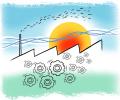
The government on Thursday allowed free inter-state wheeling of renewable energy used in the production of green hydrogen and ammonia as it seeks to boost usage of the carbon-free fuel and make India an export hub. Unveiling the first part of the much-awaited National Hydrogen Policy, Power and New and Renewable Energy Minister Raj Kumar Singh said the government is targeting production of 5 million tonnes of green hydrogen by 2030. Oil refineries to steel plants require hydrogen to produce finished products.

While the corporate sector has benefited from massive capital expenditure, leading to sky-rocketing stock prices, investors would do well to keep an eye on the macroeconomic picture and government finances, not just corporate profits, for signs of trouble, alerts Debashis Basu.

Iran has offered to help India meet its energy needs by relaunching rupee-rial trade for export of oil and gas, said Iranian ambassador to India Ali Chegeni. Chegeni said if both the countries resume rupee-rial trade, bilateral trade can touch $30 billion. Iran used to be India's second largest oil supplier but New Delhi had to halt imports after the former US president Donald Trump withdrew from the nuclear deal with Iran and re-imposed sanctions on its oil exports.

India's climate change goals are turning combustible. On the one hand, a protracted dispute between the government and manufacturers over subsidies threatens to slow the pace of electric vehicle (EV) sales. On the other hand, repeated assertions by different arms of the government over banning sales of new fossil fuel-fired vehicles have queered the pitch for energy investments. Before we address the issue of the recommended diesel vehicle ban in the recent report on energy transition, issued months before the next round of global climate talks begin in Dubai in November, let's look at what's at stake.

India is also likely to push for a Free Trade Agreement with the Eurasian Economic Zone and is sharing details of the study it conducted in this regard.

Jet fuel prices on Thursday were hiked by the steepest ever 16 per cent to catapult rates to an all-time high in step with hardening international oil rates.

The Russian-Ukraine war can hit the global supply chains that are already constrained due to the pandemic and the worst impact will be on ongoing chip shortage because the warring nations brutally control supplies of key raw materials that go into making semiconductors, warns a report. Since Russia controls as much as 44 per cent of global palladium suppplies, Ukraine produces a significant 70 per cent of the global supply of neon -- the two key raw materials that go into making chips. The markets can expect the global chip shortage, that began with the pandemic, to worsen if the military conflict lingers on, says a Moody's Analytics report on Friday.

Jet fuel prices on Saturday were hiked by a marginal 0.2 per cent -- the eighth straight increase this year -- to an all-time high, reflecting a surge in global energy prices. The price of aviation turbine fuel (ATF) -- the fuel that helps aeroplanes fly -- was hiked by Rs 277.5 per kilolitre, or 0.2 per cent, to Rs 113,202.33 per kl (Rs 113.2 per litre) in the national capital, according to a price notification of state-owned fuel retailers. Meanwhile, petrol and diesel prices remained unchanged for the 10th straight day after rising by a record Rs 10 per litre each.

US Deputy National Security Adviser Daleep Singh also referred to the 'no limits' partnership between Moscow and Beijing and said no one believes that Russia would come running to India's defence if China breaches the Line of Actual Control.

Billionaire Mukesh Ambani's Reliance Industries Ltd on Friday announced the buyout of British battery maker Faradion Ltd for an enterprise value of 100 million, as the oil-to-retail conglomerate continued with the acquisition of end-to-end technology for its multi-billion-dollar clean energy portfolio. Reliance New Energy Solar Ltd (RNESL), a unit of the nation's most valuable company, signed definitive agreements to acquire 100 per cent shareholding in Faradion for an enterprise value of 100 million and will invest an additional 25 million as growth capital to accelerate the commercial roll-out, the company said in a statement. Based out of Sheffield and Oxford in the UK and with its patented sodium-ion battery technology, Faradion is one of the leading global battery technology companies.

Oil prices have risen as freezing weather in the northern hemisphere has increased energy demand for heating.

The ongoing headwinds like war-triggered inflation, rate tightening by RBI and weak rupee will lead to a Rs 60,000 crore increase in 'risky debt' in FY23, a ratings agency warned on Monday. Defining 'risky debt' as borrowings by companies having a net leverage or debt to operating profit ratio of more than five times, India Ratings said the ongoing troubles will take the stock of such loans to Rs 6.9 lakh crore by end of FY23, as against the Rs 6.3 lakh crore it would have been but for the Russian invasion of Ukraine. An analysis of 1,385 corporate entities led the domestic ratings agency to trim revenue growth projection for entities in a post-war scenario and also forecast narrowing of the profit margins due to higher commodity prices, an increase in interest rates of up to 1 per cent and the rupee depreciating by a tenth.

He unveiled the country's ambitious space project's timeline during a media interaction.

Global oil prices have slumped and India has access to larger amounts of discounted Russian crude oil, yet refiners are not passing on their savings to consumers

Indian companies are planning to increase investments in the new year to expand capacity, acquire companies, and go on a hiring spree, a survey of top executives showed. They, however, cited rising costs, weak consumer demand, and increasing interest rates as major concerns for 2023 which may impact their plans.

Modi to receive Lokmanya Tilak National Award, constituted by Tilak Smarak Mandir Trust in 1983, to honour the legacy of Lokmanya Tilak

Jet fuel prices on Monday were hiked by a steep 5.3 per cent - the tenth straight increase this year -- to an all-time high, in line with a surge in global energy prices. The price of aviation turbine fuel (ATF) -- the fuel that helps aeroplanes fly -- was hiked by Rs 6,188.25 per kilolitre, or 5.29 per cent, to Rs 1,23,039.71 per kl (Rs 123 per litre) in the national capital, according to a price notification of state-owned fuel retailers. This is the 10th straight increase in jet fuel prices this year.
"In principle, the ask in return is that India should not support the G7 (Group of Seven) proposal. "A decision on this issue will be taken later following talks with all the partners," an official with the Ministry of External Affairs (MEA) said.These "substantial discounts" will be steeper than those offered by Iraq in the past two months, officials said.

In Dubai, A Ganesh Nadar encountered high speeds on smooth-as-silk-roads, no bureaucracy, gold, Mr Toad's. And snow!

Investors are showing some interest in the downstream energy cycle. Refiners and marketers, especially the public sector (PSU) oil marketing companies (OMCs) could see a revival of marketing margins. Lower crude oil and gas prices may also improve margins in industries like paints, logistics, synthetic fabrics, plastics, and fertilisers. In the medium-term, however, there could be a supply overhang affecting OMCs as new refining capacities are scheduled to be commissioned, especially in China, and this may lead to a drop in the refining margins as capacity would be surplus to demand until and unless there's a pick-up in global growth.

Indian companies place orders worth $600 million for US crude, which is likely to increase by nearly $2 billion in the near future.

After a tumultuous past few days that almost halved value of the Adani group, embattled tycoon Gautam Adani-led conglomerate had some pressure eased on Friday as two global rating firms stuck with their calls on its credit profile and its French partner backed its investments in the group firms. Also for the first time since January 24, shares of the group's flagship firm Adani Enterprises ended in positive territory after erasing an intraday loss of 35 per cent. Adani Ports and SEZ also ended 8 per cent higher. This is after a over $100-billion rout in value of group stock since the US short seller Hindenburg Research accused Adani group of stock manipulation and accounting fraud.

Changes in global oil and gas rates matter more to India's economy than other major economies because the country imports around 87 per cent of its oil, half of its gas in the form of LNG, and over 60 per cent of its LPG.

Most analysts as well as company executives say the rally in commodity prices is ill-timed coming just when firms were recovering from disruptions such as demonetisation & introduction of GST

The finance ministry said on Tuesday that high energy and commodity prices due to the Russian invasion of Ukraine may provide an upside risk to inflation and continued vigil is required. "Going forward, elevated energy and commodity prices may act as an upside risk to the inflation outlook in the near-medium term. "Given the inherently unsustainable nature of high prices, international commodity prices are expected to level off early with an increase in supplies outside the crisis zone," the department of economic affairs said in its latest monthly economic report for February.

International oil prices have hit a six-month low, helping Indian fuel retailers breakeven on petrol but they continue to lose money on diesel - the most used fuel in the country, officials said. The world's best-known crude benchmark, Brent was trading at $94.91 per barrel on Thursday after concerns of a global recession led to it slipping to a six-month low of $91.51 on the previous day. The current rates are a relief to India, which is 85 per cent dependent on imports for meeting its oil needs.

One of the challenges for those car graves is that Indian owners often find markets for their old cars rather than send them to scrapyards.

The EV industry is at an inflection point and batteries will play a critical role ahead -- batteries and related components typically constitute 35-45 per cent of an EV's costs.

The growth in world trade is expected to slow down to one per cent in 2023, due to global uncertainties, according to a WTO forecast. The World Trade Organization (WTO) has also projected a growth of 3.5 per cent in global trade this year, as against the April estimate of 3 per cent. World trade is expected to lose momentum in the second half of 2022 and remain subdued in 2023, as multiple shocks weigh on the global economy, the multi-lateral body has said in a statement.

10 non-bank and non-finance stocks from the BSE500 Index universe that offer an optimal blend of low valuation, reasonably robust revenue and earnings growth in recent quarters, a strong balance sheet, and most importantly, positive cash flow from their operations.

There's a straightforward relationship between economic activity and power consumption. If economic activity increases, so does power consumption. Since the latest GDP (gross domestic product) data indicates India's growth rates exceeded expectations in the second half if the 2022-23 financial year (H2FY23) and GDP estimates of FY24 are strong, we would expect power consumption to rise as indeed it has. There is also a direct relationship between power consumption and National Thermal Power Corporation or NTPC's results since the public sector undertaking (PSU) is the largest power generator in India.

New Delhi's timing couldn't have been worse, both for India's fledgling electric vehicle (EV) sector and prospective electric bike buyers. It was hard to miss the perfect storm brewing for India's EV industry since early 2022. On one hand, you had several accidents involving battery fires that unnerved consumers; on the other, uncertainty had crept in over subsidies.

In the coming months, globally as well as in India, rice might remain a hot potato.
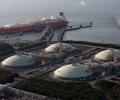
Around 15 years ago, when Reliance Industries (RIL) struck natural gas in the Krishna-Godavari (KG) basin off the east coast, the government made plans to supply that fuel cheaply to scores of generators that sprang up in India triggered by the discovery. Most of the plants, which account for 6 per cent of India's total generation capacity, operate sparsely after the KG-D6 area first failed to meet production targets, and then finally shut shop. Affordable domestic gas was why those thermal plants came up and the rate of the fuel today is why those generators hardly operate. Record liquefied natural gas (LNG) rates may yet again unravel India's ambitions to expand use of gas in industries, households and vehicles. Rates, while volatile, may stay strong this decade as developed nations with higher purchasing power embrace gas as the transition fuel.

With India's imports exceeding exports, weak rupee does more harm than good. Analysts, however, say that rupee depriciation is positive for export-oriented sectors such as IT services, pharmaceuticals, textiles and automobiles
